An AI Prompt to Rewrite a Meta Description really shines when you feed it the page purpose, search intent, proof points, and strict limits. You’re not asking AI to whip up a sales pitch.
You want a concise, accurate search-result message that gives the right searcher a reason to click. That’s the ticket.

Meta descriptions aren’t a direct Google ranking factor, and sometimes Google rewrites them anyway. But they absolutely shape how tempting your result looks, so don’t sleep on their power for CTR and content optimization.
Treat meta rewrites as a piece of your overall SEO game plan. After you update, keep an eye on how your snippet stacks up in real search results.
Build a Prompt That Produces Usable Copy
Strong SEO prompts give ChatGPT enough context to spit out copy you can actually use. You want to include the page goal, audience, keywords, evidence, and rules before you ask for meta descriptions.
Specify Search Intent, Page Value, and Audience
Tell the model what the searcher wants and what your page brings to the table. For example, an educational guide needs a teaching vibe, while an ecommerce category page should highlight choices, price, or delivery.
Here’s a handy prompt structure:
Rewrite this meta description for higher CTR. Target search intent: [informational/commercial/local]. Audience: [audience]. Page value: [specific benefit or proof]. Do not add claims not found on the page.
Set Keyword, Length, Tone, and Format Constraints
Drop in your primary keyword naturally. Only add secondary or long-tail keywords if they fit the flow.
Don’t turn your snippet into a keyword salad. Ask for three options and their character counts:
Write 3 unique meta descriptions for this page. Include the primary keyword “[target keyword]” once. Keep each between 145 and 160 characters. Tone: [tone]. End with a specific, natural CTA. Return only the descriptions and character counts.
Google’s advice? Keep it accurate, page-specific, and skip the generic fluff. If you’re writing at scale, check Google’s meta description guidance first.
Use Prompt Variants for Ecommerce, Local, and SaaS Pages
For ecommerce, give AI the product type, what makes it special, price range, shipping, and stock status. For local pages, share the service, city, area, and a real differentiator.
For SaaS, mention the user’s problem, highlight features, integrations, pricing signals, and what you want the user to do. If you need translation, tell AI to keep the meaning and local search flavor, not just swap words.
Avoid Hallucinations, Keyword Stuffing, and Generic CTAs
Don’t let AI sneak in claims like “best,” “leading,” or “free” unless your page backs them up. Sometimes AI likes to get creative, but you want facts, not fiction.
Skip vague CTAs like “Learn more.” Go for something specific and true to your page, like “Compare plans,” “See available models,” or “Book your estimate.” You want clicks that actually convert, not just window shoppers.
Validate, Publish, and Measure the Rewrite
Think of a better snippet as a testable hunch, not a one-and-done SEO task. Check how your description fits with the meta title, title tag, and what’s actually on the page.
Check SERP Snippet Fit and On-Page Consistency
Preview your snippet. Then search your main query and see what shows up live.
Google sometimes grabs text from your H1, H2, H3, or body content if it matches the query better than your meta description. Make sure your meta title, H1, and description all promise the same thing.
If your description mentions “pricing,” your page better show pricing or explain it clearly. No bait and switch.
Prevent Duplicate Metadata Across Similar Pages
Ecommerce, location, and feature pages can easily end up with copy-paste metadata from templates. Give each page its own twist, whether it’s a value point, model, location, use case, or service detail.
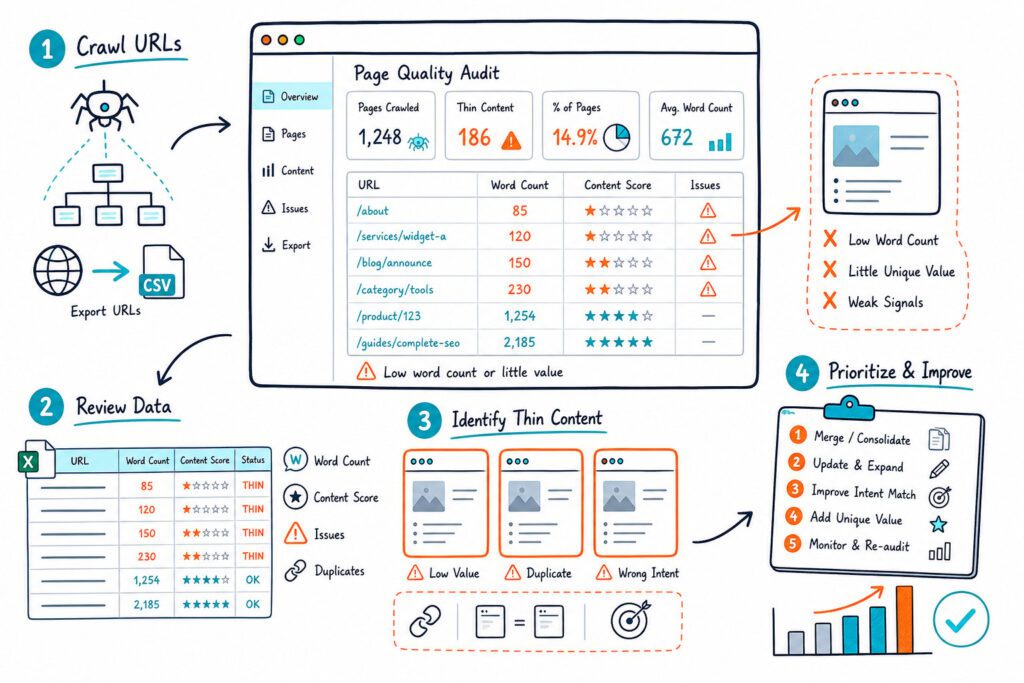
Run a metadata audit before publishing big batches. Tools like Check Page SEO can flag missing or repeated metadata while you review your pages, even if they’re on staging or behind a login.
Test CTR Changes With Google Search Console
Jot down your publish date, then compare equal stretches of time in Google Search Console. Filter by URL, then check clicks, impressions, CTR, average position, and ranking queries.
Don’t judge a rewrite after just a few days. Give it time for enough impressions and compare matching days of the week. And remember, a CTR bump means more when rankings and search volume stay steady.
On the flip side, if everything’s changing at once, it’s hard to know what moved the needle. So take it slow, measure carefully, and tweak as you go.
Use Page Audits and Keyword Data to Prioritize Rewrites
Start with pages that rack up lots of impressions but have a weak click-through rate and a steady average position. That’s usually a sign people see your page but just aren’t biting.
Dig into keyword research using Ahrefs, Semrush, or whatever SEO tool keeps you caffeinated. Make sure your page actually targets the phrases real folks type into Google.
Before you start blaming your meta description, check readability, internal links, backlinks, and the FAQs you cover. Sometimes, it’s not the snippet’s fault at all.
If your page misses the search intent or the content’s a bit flimsy, just swapping in a new meta description won’t save the day. You can generate AI-ready SEO prompts straight from your audit findings.
Then, if you’re feeling fancy, Add to Chrome for free to validate each rewrite right on the page you’re tweaking.