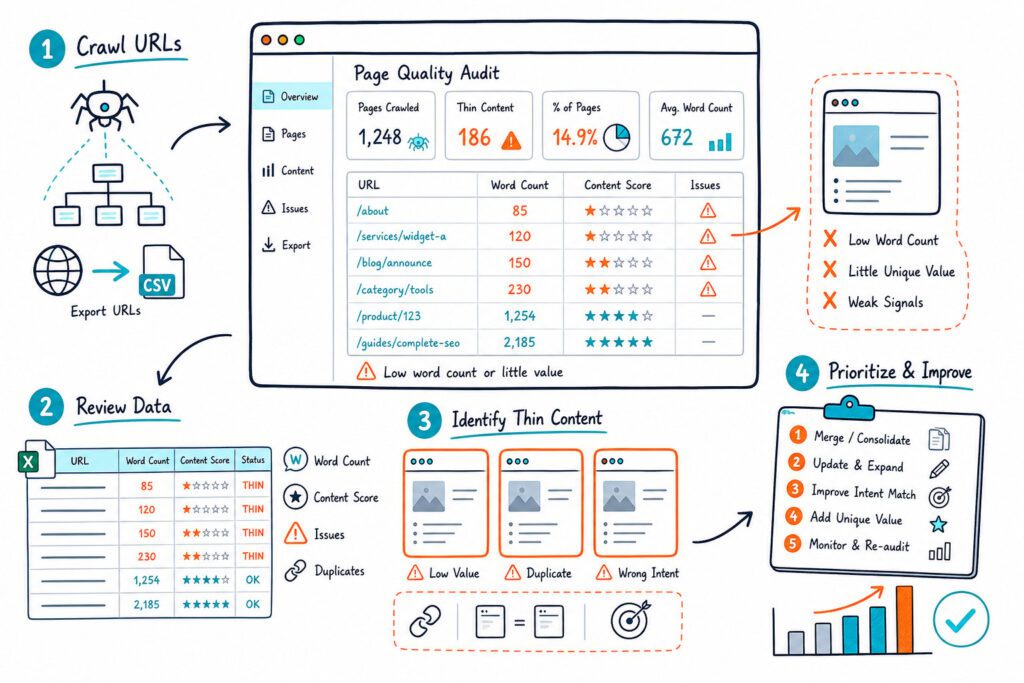
Word count isn’t a magic SEO lever. As John Mueller keeps saying, you can’t just toss extra words on a page and expect it to rocket up Google.
Still, a website word count checker can shine a light on a real problem: your page might be too thin to answer the searcher’s question or compete with beefier content.

Think of content length as a clue, not a finish line. The real question isn’t “How many words did I cram in?” but “Does my content actually help the reader with this search?”
That mindset helps you spot thin pages, add useful depth, and skip the fluff that makes folks bounce.
Measure the Main Content, Not the Page Chrome
A useful website word count should focus on what visitors came for. Ignore all the repeated page bits that pad your numbers but don’t answer the search.
What a Reliable Page-Level Count Should Include
When you’re counting words, stick to the main event: product details, article body, FAQs, headings, and captions that matter. Good word count tools also show character count, sentence count, paragraph count, and how long it’ll probably take to read.
Reading time is just a ballpark. Most tools guess based on words per minute, so treat it as a friendly heads-up, not gospel.
Why Navigation, Headers, Footers, and Templates Distort Results
Menus, headers, footers, cookie popups, sidebars, and “related posts” widgets can sneak in hundreds of extra words. Counting all that chrome can make a skinny page look like a heavyweight.
This happens a lot on big ecommerce sites. Sometimes your template adds more words than your actual product description.
Manual, URL-Based, and Browser Extension Methods
If you’re in a hurry, just copy the visible text into Word or Google Docs for a quick count. Online word counters that take a URL are faster for public pages, but they might miss stuff behind a login.
Browser extensions are often your best bet for seeing what’s really on the page. Tools like Check Page SEO let you see word count, headings, keywords, and links right in your browser.
How JavaScript-Rendered Pages Change the Measurement
What you see isn’t always what’s in the raw HTML. JavaScript can load in more content after the page starts, especially on sites built with React, Next.js, or Shopify.
To get the real word count, wait for the page to finish loading and then count what’s actually there. Otherwise, you might miss big chunks of content.
Use Length as a Content Quality Diagnostic
Word count can reveal missing info, but it doesn’t guarantee quality. Mix it with search intent, readability, structure, and real-world performance before deciding to add more copy.
Match Content Depth to Search Intent and Page Type
Some searches just need a quick, straight answer. Other queries, such as “how to fix a leaky faucet”, demand detailed steps, examples, and maybe a funny story about that time you flooded your kitchen.
Product pages? They need crisp copy, specs, reviews, FAQs, and whatever helps people buy, not a rambling essay.
The sweet spot is the shortest page that totally nails what the user needs. Research backs this up: word count isn’t a direct SEO ranking factor, so don’t stress about hitting some magic number.
Benchmark Competitors Without Copying Their Word Target
Check out the top pages for your keyword. What topics do they cover that you missed? Are there extra FAQs, images, trust signals, or helpful headings?
Don’t just match their word count. A 2,000-word competitor might be repeating themselves, while your tighter 900-word page could answer the question better and convert more visitors.
Pair Counts With Readability, Structure, and Keyword Coverage
A long page that’s a slog to read isn’t winning anybody over. Make sure your paragraphs are easy to scan, your headings actually mean something, and your keywords feel natural.
Don’t pad your page with repeats or off-topic rambling. Helpful content keeps people reading instead of clicking away.
Prioritize Updates With Search Performance Data
Crack open Google Search Console and hunt for pages with tons of impressions but a sad little click-through rate, or rankings that are just shy of greatness.
If those pages are looking a bit thin compared to what your competitors are serving up, that’s your cue to beef them up with the info they’re missing.
You can hook up your Search Console data to a live audit and size up the main content on your page. From there, whip up a focused update brief and get to work.
Ready to audit live pages, staging sites, or even snoop on competitor content? Go ahead and Add Check Page SEO to Chrome for free.