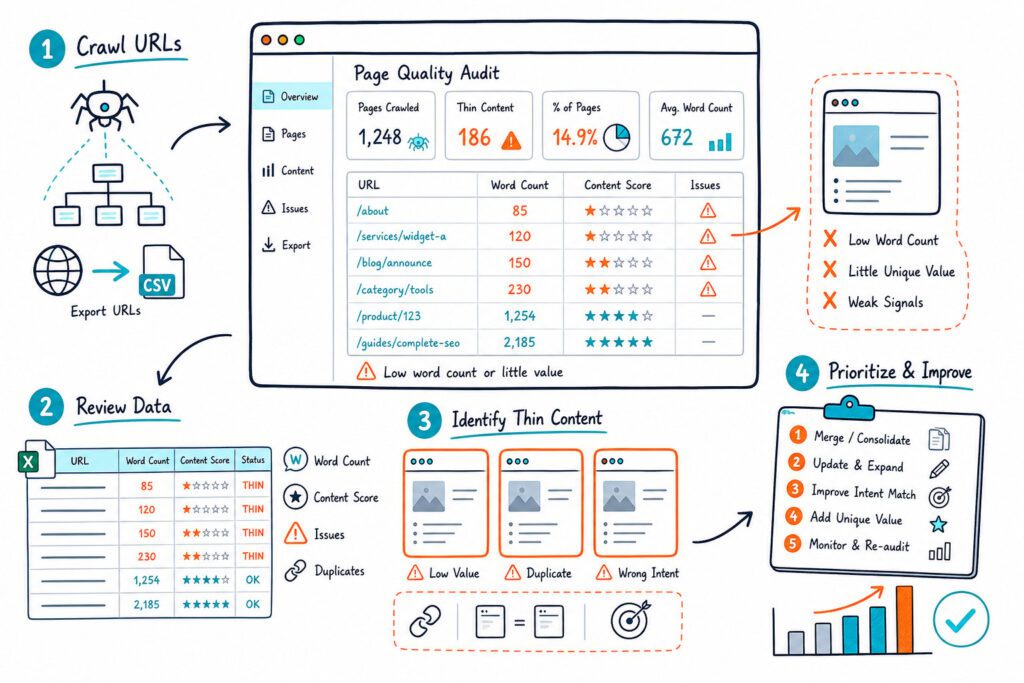
Ready to outsmart your rivals in Google? Let’s talk about reverse engineering a competitor’s on-page SEO. The trick is to line up the exact pages that compete for your chosen search query, figure out what’s working for them, and then build something even better without copying their words.
You’re on the hunt for patterns: page structure, keyword coverage, internal links, trust signals, and user experience. These are the breadcrumbs that lead to stronger rankings and more organic traffic.
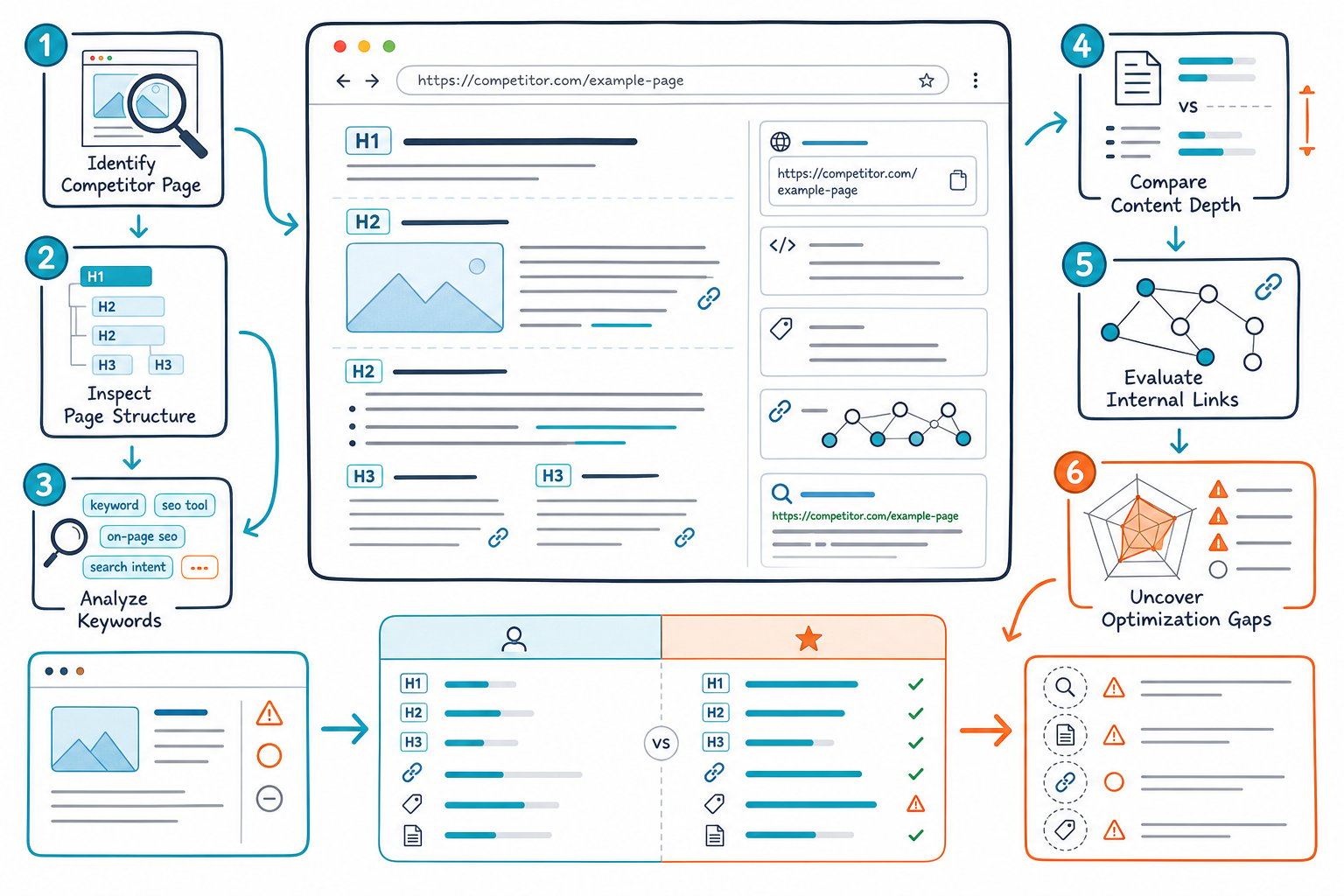
Start your research at the page level, not the whole website. Big brands might win because of sheer authority, but smaller competitors? They’re goldmines for practical on-page moves you can actually beat.
Build a Comparable Page-Level Baseline
Before you declare a competitor’s SEO “better,” you need a fair fight. Match the query, device, location, intent, and page type.
Then, jot down all the visible elements that shape the search result.
Choose True Search Competitors by Query, Location, and Device
Pop your main keyword into Google using an incognito window. Make sure you’re signed out.
Check both desktop and mobile results, since rankings can shuffle between them.
If you’re targeting a local audience, set your search to the same city or ZIP code your customers use. Save three to five pages that keep popping up for your keyword, even if you don’t consider them direct business rivals.
Map Search Intent, Keyword Targeting, and SERP Features
First, classify what kind of pages Google’s rewarding. Are you seeing guides, product pages, service landings, videos, local packs, or something else entirely?
List out the keyword modifiers that keep showing up: things like “best,” “near me,” “pricing,” or “how to.” This little exercise reveals your competitors’ keyword strategy and saves you from building the wrong kind of page for your audience.
Benchmark Titles, URLs, Snippets, and Landing-Page Purpose
Make a simple spreadsheet. For each ranking URL, record the title tag, meta description, H1, word count, page type, and main call-to-action.
Notice if the title tags lead with the keyword, a benefit, a brand name, a location, or maybe the year. Pay attention to meta descriptions. They do not boost rankings, but they show what gets the click.
If everyone else is promising pricing, comparisons, or speedy delivery, your page better answer those needs fast.
Separate On-Page Gaps from Authority and Link Gaps
Sometimes a page ranks because it’s got a boatload of backlinks or just plain old domain authority. Run a backlink analysis on each ranking URL and its wider site.
Tag each finding as on-page, technical, or authority-driven. You can tweak titles, content, and internal links right away.
But if you’re up against a site with years of link-building behind it, don’t beat yourself up. Focus on what you can actually change this week.
Extract, Prioritize, and Validate Competitive Advantages
Your best wins are often hiding in plain sight: sharper headings, stronger proof, better formatting, and smarter internal linking.
Treat each observation as a test, not gospel. What works for one site may flop for another.
Compare Heading Architecture, Content Depth, and Entity Coverage
Copy the H1, H2s, and H3s from each competing page into a single doc. Group similar headings to spot must-have subtopics.
Find the questions no one’s answering well. It’s not about word count. It’s about useful depth.
Solid content explains the task, shows proof, and makes things easy. Tools like Check Page SEO can help you compare headings, semantic terms, and visible content while you poke around.
Audit Internal Links, Media, Schema, and Technical Signals
Check where competitors send their readers next and what anchor text they use. Good internal links usually connect the ranking page to related services, guides, or proof pages.
Look at their images: do they use original visuals, helpful alt text, light file sizes, and captions? Peek at their schema markup, canonical tags, indexability, Core Web Vitals, mobile layout, and broken links.
Technical SEO won’t save you if your content’s off, but it sure can keep a great page from getting found.
Identify Experience, Trust, and Local-Relevance Evidence
Hunt for proof that the page is legit. Things like named authors, real examples, customer reviews, team bios, pricing info, and easy-to-find contact details.
Only add evidence you can back up. Don’t make stuff up. For local SEO, compare service areas, NAP consistency, citations, reviews, maps, and Google Business Profile details.
Make sure your page shows you’re local and relevant, but don’t get carried away stuffing city names everywhere. Nobody likes that.
Turn Findings into a Testable On-Page Optimization Plan
Prioritize changes by what’ll move the needle fastest and what’s easiest to fix.
- Start with intent mismatches, weak H1s, missing sections, and fuzzy titles.
- Add missing entities, examples, media, and internal links that actually help users.
- Tidy up schema markup, indexability, page speed, and accessibility.
- Make a separate plan for link-building, outreach, guest posting, and digital PR.
Write one clear hypothesis for each update. For example: “Adding a pricing section and comparison table will better match commercial intent and help us rank higher for high-intent queries.”
And there you have it: a battle plan for outsmarting the competition and climbing those rankings. Now go make your page shine.
Measure Impact With Search Console And Avoid Shortcut Tactics
First things first: before you hit publish, jump into Google Search Console. Jot down your baseline clicks, impressions, CTR, average position, and those all-important ranking queries.
After Google’s had a chance to recrawl your page, come back and compare equal date ranges. Give it a little more time if your page doesn’t get much traffic.
Now, let’s talk about shortcuts. Don’t get tempted by social bookmarking blasts, PBNs, or copying your competitor’s text. Those tricks might look flashy, but they’re all risk and no reward for real users.
Instead, pair your Search Console data with your audit findings. That’s how you’ll know if your on-page tweaks actually moved the needle.
And if you want to size up the competition, download the Check Page SEO Chrome extension. It’ll help you turn a competitor’s page into your next action plan, minus the guesswork.