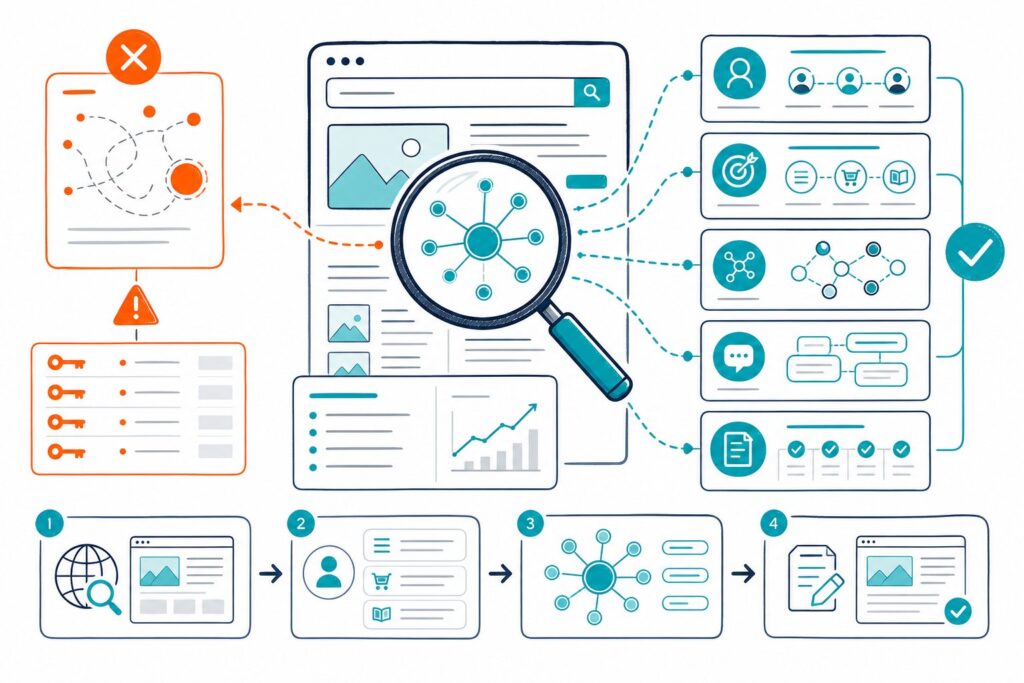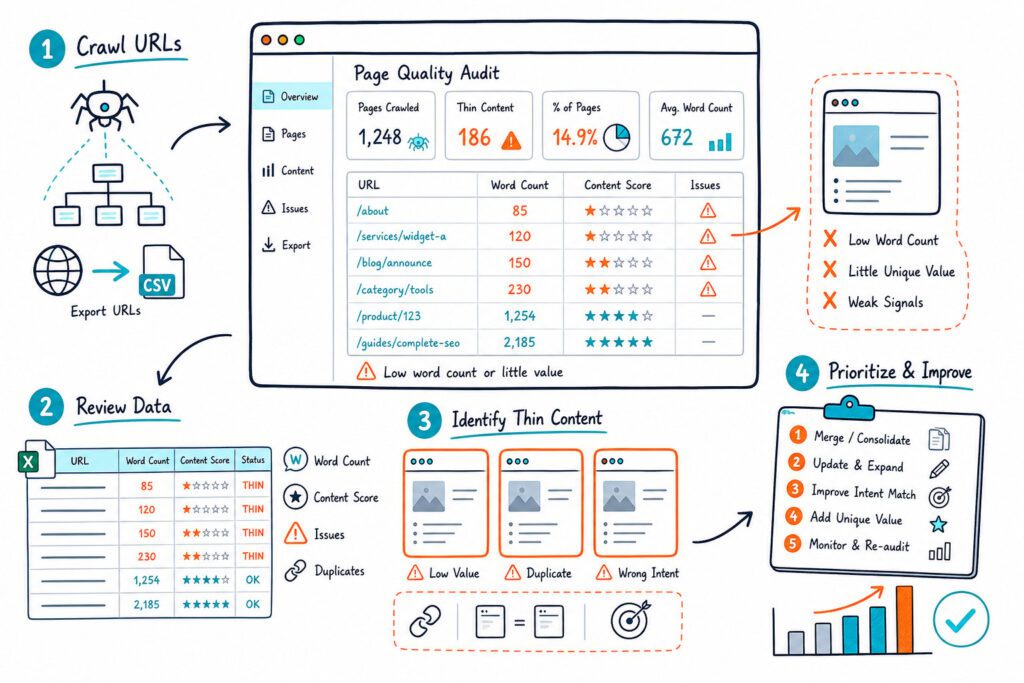
If you want more than a quick metadata overlay, the best SEOquake alternatives slide right into a live URL workflow. You’ll want to pin down query intent, check Search Console performance, poke around the rendered page, validate crawlability, size up a competitor, and measure if your tweaks actually move the needle.

The right tool really depends on the job at hand. Chrome extensions are perfect for those logged-in CMS drafts or staging URLs, while crawlers and content tools cover different bases.
Let’s dive into the top SEOquake alternatives and see how they stack up for real-world page audits.
1) Check Page SEO
Check Page SEO is your go-to when you need to audit whatever’s open in your browser tab. That includes staging pages, CMS previews, and even those sneaky URLs hiding behind a login.
You get the works: rendered HTML, metadata, headings, links, images, schema, canonicals, robots directives, and the actual page content, all without sending your URL off to a cloud crawler.
It shines during inspection and competitor comparison. You can pit your page against a competitor’s, then pull in Search Console data to tie rankings, clicks, and queries to what you’re seeing.
Don’t get too hung up on the page scores; they’re more like a traffic light than a crystal ball. Let them nudge you to check things like indexability, canonicals, headings, and content quality.
Basic audits are free. Reports, competitor checks, AI prompts, and local data use credits, so keep an eye on your usage.
Download the Check Page SEO Chrome extension if you need to audit live pages more than you need a domain-wide crawl.
2) Detailed SEO Extension
Detailed SEO Extension is a quick, no-nonsense browser tool for checking the SEO nuts and bolts of any public page. Titles, descriptions, headings, canonicals, robots, structured data, images, links. You get a clean readout in seconds.
It’s best early in your workflow, right after you pick your target query and before you go down the rabbit hole of a deep crawl. It’ll flag obvious issues like duplicate H1s, missing canonicals, or noindex tags.
Just know its limits. You’ll get a handy snapshot, but not Search Console data, trend lines, competitor gaps, or a full technical crawl.
If your site relies on JavaScript or has authenticated URLs, double-check what the extension actually sees. Sometimes, what you see isn’t what the tool sees.
For fast spot checks, it’s a solid SEOquake replacement.
3) SEO Minion
SEO Minion is your sidekick for SERP checks, hreflang validation, broken-link hunting, and quick on-page inspections. It’s especially useful for international sites where you need to make sure alternate-language URLs actually point to the right place.
Pull it out during crawlability or international SEO reviews. Its rendered-vs-raw HTML view is a lifesaver for catching content or metadata that only pops up after JavaScript does its thing.
But to be fair, it’s not your all-in-one solution for performance or competitor analysis. You’ll still want Search Console for query data and a crawler for the big picture.
Some features depend on your Keywords Everywhere subscription, so check your plan if you’ve got a team.
4) Google Search Console
Google Search Console should be your first and last stop for any URL optimization. It’s where you check the baseline: clicks, impressions, CTR, average position, and the actual queries tied to your page.
Start with the URL inspection report, index coverage, canonical status, and Page Experience. Then filter by page and query. If you see high impressions but low CTR, it might be time to test a new title or description.
If a query is hovering near page one, maybe your headings need beefing up or your intent match needs work.
But Search Console won’t tell you if your structure is weak, content is thin, or links are broken. You’ll need an on-page audit tool for that.
Don’t treat average position as gospel. SERPs are a moving target; devices, locations, and features all mess with the numbers.
Always compare apples to apples: same date range, URL, query group, country, and device.
5) Google Lighthouse
Google Lighthouse is your best friend when your live URL has performance, accessibility, or Core Web Vitals issues. Fire it up in Chrome DevTools and test the actual page template and device conditions your users see.
Run Lighthouse after you’ve checked relevance and indexability. Fixing a missing H1 is usually easier than wrangling JavaScript bloat, so split content bugs from engineering headaches.
Keep an eye on render-blocking resources, unused JavaScript, image formats, layout shift, main-thread work, and accessibility errors. These are the gremlins that tank user experience.
Remember, Lighthouse is a lab test. Results can swing wildly depending on device emulation, network, pop-ups, or cache.
Pair Lighthouse with field data from Search Console or Chrome UX Report when you can. The goal isn’t a perfect score; it’s finding real bottlenecks.
6) Screaming Frog SEO Spider
Screaming Frog SEO Spider is the heavyweight champ when your page issue might be a site-wide problem. Crawl internal links, redirects, canonicals, pagination, sitemaps, JavaScript rendering, and response codes across thousands of URLs.
Use it after a problem pops up in Search Console. Check for weak internal links, orphans, redirect chains, conflicting canonicals, or template issues lurking in a folder.
For JavaScript-heavy sites, compare rendered and raw HTML. You’ll often spot content or links that show up in the browser but vanish for crawlers.
There’s a crawl limit on the free version. The paid license is better for big sites or saved configs.
If you need to check logged-in pages, you might have to fiddle with setup, cookies, or browser authentication. For a one-off, a browser extension is usually quicker.
7) Semrush
Semrush is your research powerhouse when you want the big picture around a page audit. Think keyword research, rank tracking, backlink analysis, competitive domains, site audits, and content planning.
It’s great before and after a live-page review. Use it to map out the search landscape, spot competitors, check keyword overlap, and review backlink gaps.
Semrush is wide-ranging, but remember: its keyword, traffic, and authority metrics are estimates. They help prioritize, but they’re not the final word.
Once you add projects, tracked keywords, and extra users, the price can climb. That makes Semrush a better fit for agencies or big teams than solo site owners needing quick page checks.
It’s a regular on comparison lists of SEOquake competitors and alternatives.
8) Ahrefs
Ahrefs is the tool to grab when you’re all about links, competitor research, or hunting for new content opportunities. You can dig into referring domains, link growth, anchor text, ranking pages, keyword gaps, and competing content at both domain and URL level.
It’s ideal when your on-page work is solid but you’re still missing authority or internal support. Check if better-ranking competitors have juicier editorial links, more focused topic clusters, or smarter internal anchors.
Like other third-party tools, Ahrefs’ authority and traffic numbers are proxies. Don’t use them to explain why Google ranks a page the way it does.
Ahrefs pricing is best for serious SEO teams and agencies. If you’re just fixing a single URL, a live audit and Search Console data usually give you more bang for your buck.
For off-page research, though, Ahrefs is a strong sidekick.
9) Surfer SEO
Surfer SEO is your ace during content planning and revision, especially if you want to line up your page structure with what’s working for competitors. It highlights common headings, entities, word counts, and topics across ranking pages.
Use it after you’ve nailed down query intent. If the SERP is full of comparison pages or detailed guides, your page needs to fit that mold before you start tweaking copy length or adding keywords.
Content scores are handy, but don’t let them turn your page into a robot. Add value, fill real gaps, and skip the fluff.
Surfer SEO is a paid tool, so check your plan for content editor, page, and AI limits. It works best when paired with live technical checks and Search Console data.
10) Keyword Surfer
Keyword Surfer is a lightweight, free Chrome extension that shows keyword ideas and estimated search volumes right in Google Search. It’s perfect for quick research without firing up a separate platform.
Use it while figuring out query intent. Search your main keyword, scan related searches and ranking page patterns, and jot down subtopics that actually matter.
You’ll also see SERP metrics like estimated traffic and word count. Treat these as context, not gospel. Longer isn’t always better, and estimated traffic isn’t first-party data.
It’s a focused tool. Keyword Surfer won’t audit indexability, headings, schema, redirects, Core Web Vitals, or logged-in URLs.
A recent browser and platform SEO tool comparison also puts it on the in-browser keyword data shortlist.
How to Choose an SEOquake Alternative
Match the Tool to Your Workflow
Pick your tools based on what you’re actually trying to do. Start with Search Console for performance data. Use a browser extension for live URLs, a crawler for template or site-wide issues, and competitor platforms for SERP or link research.
Don’t shell out for a big platform if you just need to check a draft page behind login. On the flip side, don’t expect a browser extension to catch redirect loops across 50,000 pages.
Check Rendered HTML and Authenticated URL Access
Make sure your audit tool checks the rendered DOM, not just the raw HTML. JavaScript can add or change headings, links, canonicals, and schema after the page loads.
If you’re working with staging or CMS previews, test if the tool can reach authenticated pages. Browser-based audits are often the easiest, since they look at what you’re already seeing.
Separate Real Issues From SEO Scores
Use SEO scores as a compass, not a map. Focus on real, observable signals: noindex tags, broken links, missing H1s, bad canonicals, slow load times, and weak query-to-heading alignment.
A good tool tells you what it found and shows you the proof. It’s up to you to decide if the issue actually matters for intent, crawlability, trust, or user experience.
Check Pricing, Credits, and Data Limits
Always check what’s free and what’s not. Some tools cap crawled URLs, projects, reports, keywords, API calls, competitor checks, or AI features.
Match what you pay to how often you use it. If you’re auditing pages every day, report exports and authenticated access might be worth paying for. If it’s a monthly health check, a crawler license could be the better deal.
A Practical URL Optimization Workflow
Establish the Query and Search Console Baseline
Pick your main query group and confirm which page Google is showing. Record clicks, impressions, CTR, average position, device mix, country, and when you start your test.
Figure out if the intent is informational, commercial, local, or navigational. A title might hit the keyword but still flop if the page format doesn’t fit what searchers want.
Audit Relevance, Crawlability, and Trust
Look at the rendered page for title, H1, heading order, visible copy, entities, internal links, canonicals, robots, schema, redirects, and indexability. Make sure the first screen clearly explains what the page offers and who it’s for.
Review trust signals that fit the page type. Think author info, company details, evidence, reviews, pricing, contact info, policies, or location details.
Compare a Relevant Competitor
Pick a competitor ranking for the same query and matching the same intent. Compare headings, depth, media, internal links, entities, page format, and trust elements.
Don’t copy their wording or chase their word count. Instead, spot missing questions, unsupported claims, weak sections, or structure choices that make their answer easier to use.
Prioritize Changes by Impact, Risk, and Testability
Always tackle the big, ugly blockers first. We’re talking noindex tags, messed-up canonicals, broken redirects, or pages nobody can reach.
Once those are out of the way, shift your focus to tweaks that actually move the needle. That means making sure your pages match what people want, clearing up confusing spots, tightening up your internal links, and filling any obvious content holes.
Keep your tests simple. If you change everything at once, including titles, headings, copy, schema, templates, URLs, you’ll never know what worked.
Jot down every change you make. Note your theory, the date you rolled it out, and how you’ll undo it if things go sideways.
Measure Equivalent Pre- and Post-Change Periods
Hang tight and give yourself enough time to gather real data. If you’re working with a high-traffic URL, you might spot some trends in just a few weeks.
But if your page doesn’t get much love, you’ll need to wait longer to see what’s actually happening. Always compare equal date ranges and make sure the days of the week line up, so you’re not comparing apples to oranges.
Check out clicks, impressions, CTR, position, and which queries are coming in. If you see more impressions but your CTR tanks, it’s time to take a closer look at your title and snippet.
On the flip side, if clicks nosedive right after a technical tweak, double-check your indexability and be ready to roll things back fast if needed.
If you want to make these audits a breeze, try out our live on-page SEO auditor. You’ll get page evidence, competitor comparisons, and a tidy action list, all tied to the exact URL you’re working on.