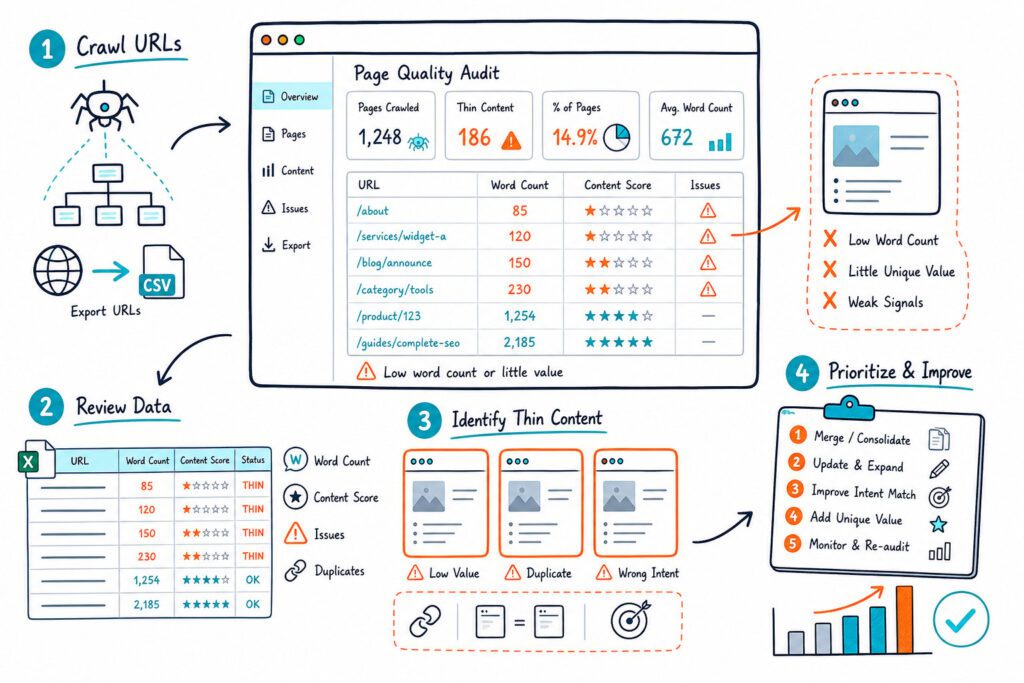
You test content readability for SEO by blending a readability score with a hands-on review of structure, intent match, and user behavior. A page can ace the formulas and still flop if your answer is buried, your headings are vague, or your copy just doesn’t fit what searchers expect.
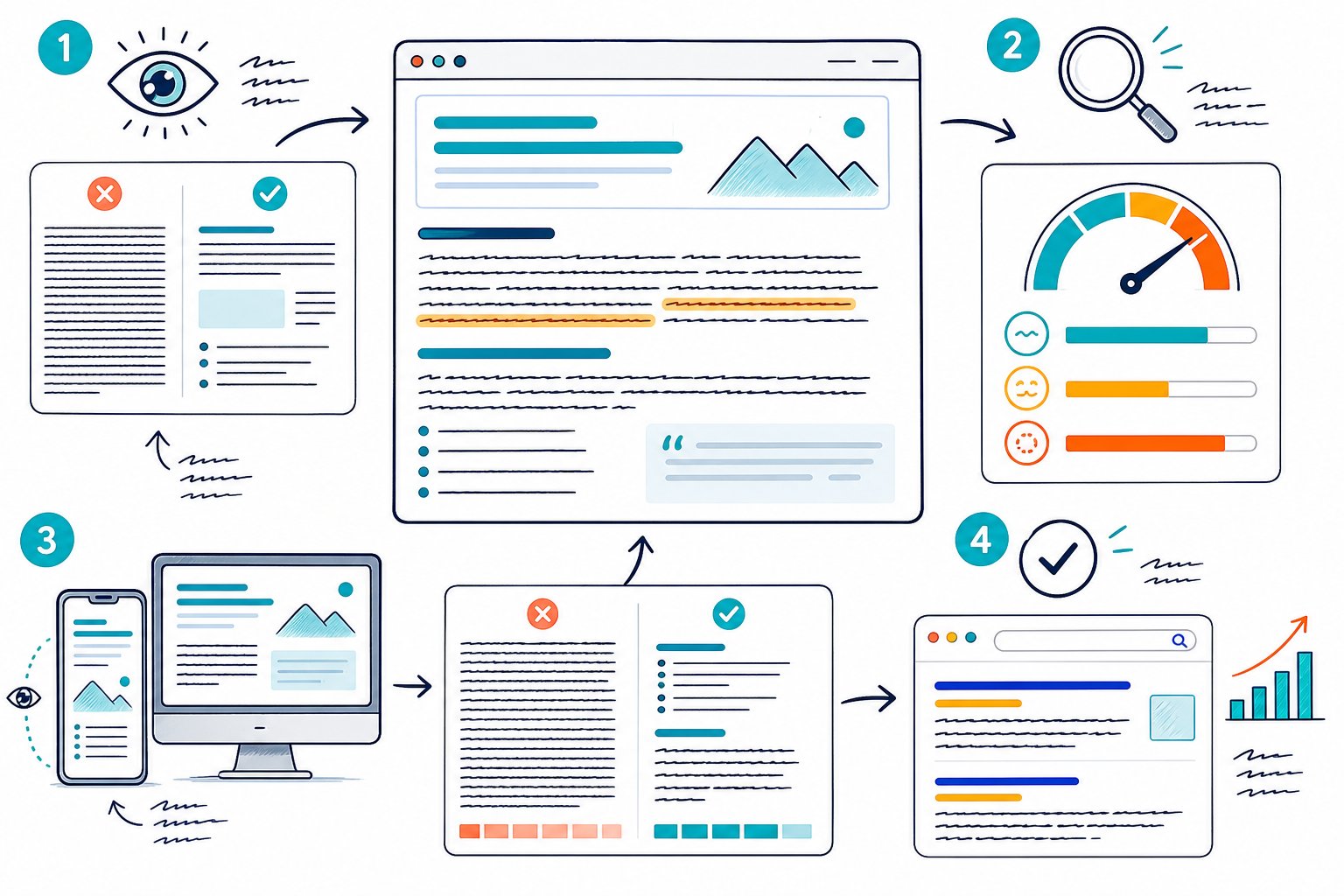
Treat readability as a practical quality check, not some magic SEO switch. Your real goal? Help visitors find, scan, and trust the answer fast, then use page data to see if your tweaks actually worked.
Measure Readability Beyond a Single Score
A formula can flag hard-to-read text. But a manual audit shows you why readers might get stuck.
You need both, plus a quick peek at the SERPs, before you go rewriting a page that’s already pulling in traffic.
Use Grade-Level Formulas as Directional Diagnostics
Flesch Reading Ease, Flesch-Kincaid Grade Level, SMOG, Gunning Fog. These formulas spot outlier pages. They look at sentence length, syllables, and word complexity, as explained in this guide to Flesch Reading Ease scoring.
Don’t chase a perfect score. Legal, medical, or technical pages might need precise terms. Aim for language your reader can follow, but don’t dumb down what needs to be smart.
Review Sentence Length, Word Choice, and Paragraph Density
Read the page out loud, especially the intro and spots where you want folks to take action. If you stumble or have to reread, your visitor probably will too.
Break up long sentences. Swap out stuffy phrases like “utilize the implementation” for “use the feature.” Keep paragraphs short enough to scan on a phone.
Check Heading Hierarchy and Scannability
Your H1 should nail the page’s purpose. H2s? They should answer the main follow-up questions, while H3s break down tricky steps, but don’t turn the page into a wall of labels.
Can readers get the gist just by scanning headings, bold text, lists, and images? A live audit in Check Page SEO can help spot missing H1s, weak H2s, thin spots, and heading-order slip-ups right on the page.
Validate Readability Against Search Intent and SERP Expectations
Search your main keyword and check out the top results. If the SERP is loaded with quick how-to answers, your long-winded academic intro probably isn’t what searchers want. On the flip side, if everyone’s doing deep product comparisons, a skimpy page won’t cut it.
Readability boosts SEO when it nails intent and keeps folks happy. It’s not a confirmed ranking factor, so judge your edits by usefulness, search visibility, and user response, not just a green light from a score.
Turn Audit Findings Into Page Improvements
Make changes in the order people experience the page. Fix the answer, structure, and clarity first.
Prioritize the Introductory Answer and Above-the-Fold Content
Put your direct answer right up top. Don’t make folks scroll through a life story before you get to the point.
Make sure your H1 and opening lines are clear and visible on mobile. If banners, giant images, or fluffy copy hog the first screen, trim the fat.
Rewrite Complex Passages Without Removing Necessary Expertise
Keep specialist terms when they’re accurate and expected. Define them in plain English the first time, then toss in a quick example.
For instance, swap “Readability is contingent on lexical simplification” for “Readability improves when you use familiar words and shorter sentences.” Same idea, less brainpower required.
Add Lists, Examples, and Supporting Subheadings
Use lists for steps, options, or checks. Drop in an example after abstract advice, especially when you’re explaining technical SEO moves.
A practical page layout usually looks like this:
- A direct answer
- Short, punchy paragraphs
- Step-by-step actions
- Examples of good and bad copy
- Clear headings that match search questions
Audit Accessibility Signals That Support Clear Reading
Check your alt text, contrast, font size, link labels, and table markup. These little details help more people use your page and often reveal fuzzy writing.
Ditch “click here” links. Use descriptive anchors that spell out the next move or destination. And double-check that your text still makes sense if images, video, or fancy design bits vanish.
Measure Impact With Search Console and Engagement Data
Jot down your baseline stats before you publish changes. Compare clicks, impressions, CTR, average position, and top ranking queries in Google Search Console over the same date range.
Focus on pages with lots of impressions but weak CTR, or stuff ranking just outside the top spots. Check Page SEO can show page-level Search Console data right next to your audit, so you can actually see if your readability fix moved the needle.
Format Clear Facts for GEO and AI Search Results
For GEO, or generative engine optimization, you want key facts to pop off the page. Make them easy for both humans and bots to grab, but don’t toss out the juicy context.
Use direct statements, define your terms, and name names. Structured lists help too, when they fit.
Kick off each section with the answer front and center. Then back it up with details, stories, or whatever makes your point stick.
Clear formatting isn’t just for show. It actually makes your content shine in AI-driven search results, especially if you’ve got unique examples, sharp observations, and well-labeled facts.
Add to Chrome for free to check readability, headings, structure, and those all-important on-page SEO signals right as you work.