Screaming Frog is a classic for full-site crawling, but let’s be honest, it can feel like overkill when you just want to check one live URL, validate a staging template, or poke around a page behind a login. Sometimes, you need something quicker and more focused.
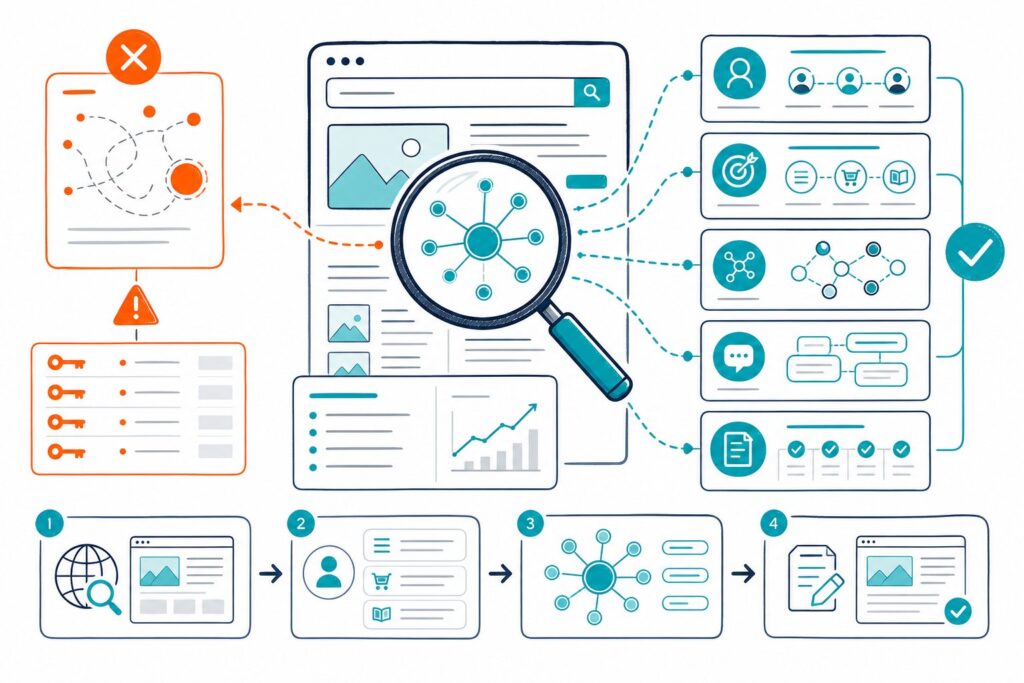
The best Screaming Frog alternatives for on-page SEO let you connect the dots between rendered HTML, indexability, query intent, competitor coverage, and Search Console performance before you hit publish.

Pick your tool based on the job at hand. Start with the page and its target queries. Check what both users and crawlers can see.
If you need to, compare a competitor. After you go live, keep an eye on clicks, impressions, CTR, and position.
1) Check Page SEO
Check Page SEO is a lifesaver when you’re staring at a URL in Chrome and want answers, fast. It audits rendered metadata, headings, links, images, schema, canonicals, robots directives, content structure, and keyword coverage, all without sending your URL to a remote crawler.
It shines for staging pages, CMS previews, and those pesky authenticated URLs that cloud crawlers just can’t reach. You can even compare competitor pages and view Search Console data right next to your audit.
Use it before you publish. Double-check your H1, title, entities, internal links, conversion copy, and indexability to make sure everything matches the query intent.
It’s not built for massive crawls. This is a spot-checker, not a 100,000-URL beast. The scores are just prioritization nudges, not magic Google levers.
Add Check Page SEO to Chrome for free for structural audits. More advanced reports, competitor checks, AI prompts, and local data use credits.
2) Google Search Console
Google Search Console is your performance home base. Before you mess with a page, check which queries are bringing in impressions, clicks, CTR, and average position.
Look for query groups where you’re close to page one, getting lots of views but few clicks, or ranking for something your copy doesn’t really answer.
Use it to get your baseline and measure what happens next. Slice by page, query, country, device, or search appearance, depending on what helps.
It won’t tell you if your H1 is missing or if your canonical is fighting you. And it definitely won’t show if a competitor covers something you completely missed. Pair it with a live audit or crawler for the nitty-gritty.
Don’t obsess over average position. It’s a fuzzy number, averaged across queries, devices, locations, and SERP chaos. Use it for trends, not for pin-the-tail-on-the-ranking.
3) Chrome DevTools
Chrome DevTools is the go-to freebie for seeing what the browser actually spits out. Pop open the Elements panel to check headings, canonicals, meta robots, structured data, lazy-loaded images, and those sneaky JavaScript-generated links.
The Network panel is gold when a page looks fine but loads slow, fails on mobile, or fetches weird assets. You can also peek at redirects, response headers, blocked resources, and Core Web Vitals through Lighthouse.
Use DevTools for rendered DOM and performance checks. It’s the quickest way to spot if your SEO headache is coming from the template, client-side rendering, CSS, or a rogue third-party script.
It won’t scale or spit out pretty reports. You’ve got to know what you’re looking for. Use it to test specific hunches, not to run a whole site audit.
4) Sitebulb
Sitebulb is a desktop crawler that’s perfect for consultants and agencies who want crawl data served up with visual flair. Its site architecture views and prioritized hints make technical findings easier to explain to the team.
Use it for sitewide crawls and handoffs. It’ll help you spot duplicate titles, redirect chains, orphan-page risks, internal-link gaps, crawl depth issues, and indexability quirks across your site.
Turning crawl output into an action plan is where Sitebulb really shines. Crawler comparisons often highlight its visual strengths.
On the flip side, you’ll need a local machine and a bit of setup. For a single staging URL behind a login, a browser-based audit is usually quicker.
5) Ahrefs Site Audit
Ahrefs Site Audit is great when you want technical audits mixed with backlink, keyword, and competitor research. Crawl your project, spot issues, and then tap into the Ahrefs universe for linking opportunities and competing pages.
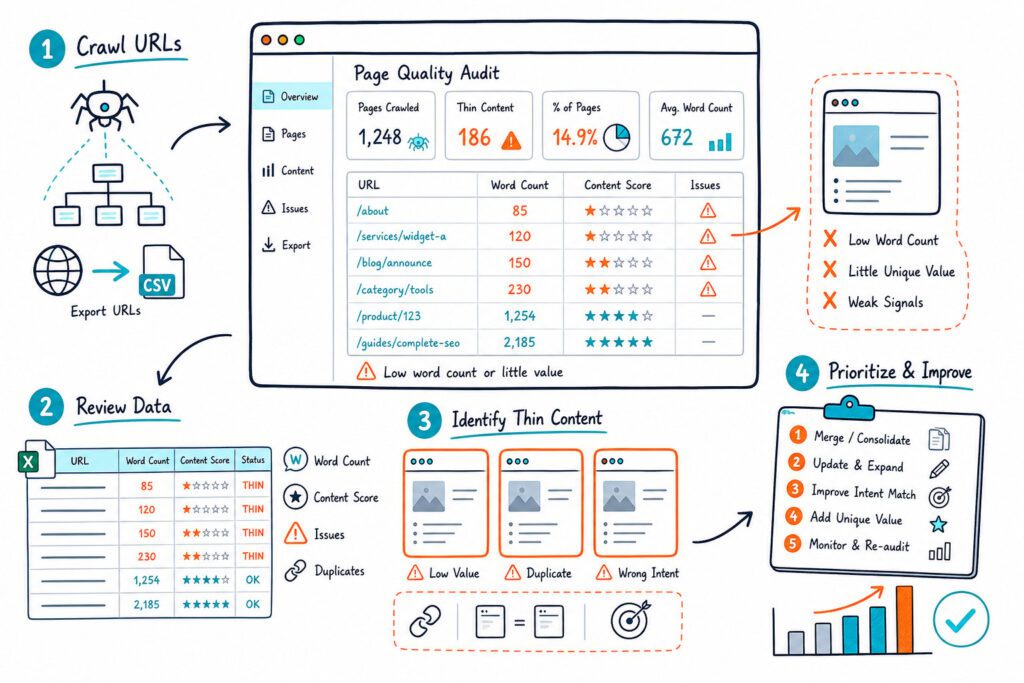
Use it when you need to see if a page-level issue is really a sitewide pattern, such as weak internal links, thin category pages, duplicate content, or template-level metadata fails.
The best part? Context. You can jump from a crawl issue to referring domains, competitors, and search demand without bouncing between tools.
It won’t crawl everything, though. Pages behind logins, private staging, or firewalls might stay hidden. Subscription limits can also cramp your style on big sites.
6) Semrush Site Audit
Semrush Site Audit is a good fit for teams already deep into Semrush for keywords, rank tracking, or competitor sleuthing. It flags broken internal links, crawlability issues, HTTPS problems, duplicate metadata, markup errors, and overall site health.
Use it for recurring monitoring and campaign planning. Schedule crawls after releases, then divvy up technical fixes to devs and content tweaks to editors. The project setup is handy when several people need eyes on the same audit.
Its main quirk is prioritizing at the URL level. If you don’t check query opportunity and business value first, you might end up fixing a lot of low-impact warnings.
Health metrics are just triage. Sometimes a low-scoring page brings in the money, while a technically perfect one needs a content rethink.
7) Sitechecker
Sitechecker is a solid cloud choice for smaller teams who want scheduled audits, issue alerts, and easy-to-read reports. It keeps tabs on broken links, status codes, metadata gaps, indexability, and technical changes.
Use it for monitoring and client updates. It’s great when you need simple reports and don’t want to wrangle massive crawl files or teach clients how to read desktop outputs.
If you need to dig into JavaScript rendering, login-only pages, or the fine details of headings and entities, you’ll probably want DevTools or a browser extension.
Always double-check your crawl settings. JavaScript, crawl scope, blocked URLs, and robots rules can all change what Sitechecker sees.
8) Seobility
Seobility is a straightforward site audit tool for site owners and small SEO teams. It covers the basics: broken links, title and description issues, duplicate content, sitemap checks, and crawlability errors.
Use it for routine maintenance. It’s a solid pick when you just need a list of technical fixes across a small or mid-sized site.
Just be careful not to fall into checklist SEO. Sometimes a missing meta description matters less than a page that ranks for the wrong intent or fails to answer the user’s question.
Take its findings as a starting point. Then look at the actual URL, peek at competitors, and see if your tweaks move the needle on the queries that count.
9) Detailed SEO Extension
Detailed SEO Extension is great for quick, manual checkups while you browse. Instantly scan titles, meta descriptions, headings, canonicals, robots tags, images, links, schema, and page-level details.
Use it for first-pass inspections. Whether you’re sizing up a competitor or checking a page during a content brief, it’ll surface obvious structure in seconds.
It won’t do deep analysis or tie into your workflow. You’ll still need a process for comparing content coverage, validating what’s rendered, reviewing Search Console queries, and keeping track of changes.
Think of it as a handy browser sidekick. For your own pages, pair it with Search Console and a more detailed audit tool so you can go from “what’s here” to “what should change and how will we test it?”
10) Netpeak Spider
Netpeak Spider is a desktop crawler built for technical SEO teams who want custom site crawls, detailed exports, and lots of configuration. It checks status codes, redirects, canonicals, metadata, duplicate content, internal links, and technical patterns.
Use it for big technical audits, especially when you need to export data for spreadsheets or BI tools. Developers love it when they need specific URL lists, not just broad advice.
Netpeak Spider often pops up in lists of top crawler alternatives, along with Semrush and Ahrefs, in crowd-sourced SEO tool roundups.
Its main drawback is that, like other desktop crawlers, it can be overkill for a quick check on one page. Use it for deep dives. For a fast rendered URL diagnosis, grab a browser tool.
How To Choose A Tool For A Page-Level SEO Workflow
Start With Query Intent And A Search Console Baseline
Kick things off with the page URL and the queries already linked to it. Check clicks, impressions, CTR, position, device mix, and country before you start tweaking content.
Write a quick hypothesis: “Adding a comparison section and clearer commercial headings will better satisfy queries with ‘best’ and ‘vs.’” That way, you’re working toward what people actually search for, not just fixing random audit warnings.
Check The Rendered DOM, Indexability, And Redirect Path
Don’t just look at the raw HTML. Inspect the rendered DOM. Make sure your title, H1, main copy, internal links, canonicals, structured data, and images are all there once JavaScript does its thing.
Then, check the URL path: response code, redirect hops, canonical target, robots directives, XML sitemap, and index status. A killer content update won’t help if the page is blocked from indexing or canonicalized away.
Match Crawl Scale, Collaboration, And Reporting Needs
For one live URL, private pages, or staging, browser extensions are your best friend. For deep dives and site architecture, go desktop crawler. For scheduled crawls, shared dashboards, and ongoing client reports, use a cloud platform.
Always check pricing and limits before you commit. Free tiers might cap URLs, projects, rendered crawls, exports, or historical data.
Prioritize Changes By Impact, Risk, And Testability
Put your energy into changes that have clear query relevance, low risk, and measurable results. A missing canonical on a duplicate template? Fix that pronto. Rewriting body copy on a page with zero impressions? Maybe not top priority.
Check internal links, title intent, H1 clarity, heading coverage, supporting entities, page speed, and trust signals together. Forget keyword density targets. Write for humans and answer the query naturally. That’s what really counts.
Measure Equivalent Pre- And Post-Change Periods
First things first, jot down the deployment date. Then, crack open Search Console and compare the same number of days before and after your change.
If you can, line up the same days of the week to dodge any weird weekday or weekend swings. That way, you’re not comparing apples to oranges.
For pages that barely get any traffic, patience is your friend. Sometimes you just have to wait a bit longer to see what’s really happening.
Keep an eye on whether your target query group scored more impressions, clicks, or a better CTR. Maybe you even snagged a higher position.
But don’t forget to peek under the hood for any crawl, rendering, or conversion hiccups. No one wants a shiny new update that actually breaks stuff.