A ChatGPT Content Optimisation Prompt works best when you treat it like an editorial brief, not just a plea to “improve SEO.” Give ChatGPT the page evidence, target intent, limits, and a clear deliverable.
That way, you get edits your writer can actually use, instead of a bunch of generic keyword suggestions that sound like they came from a robot.

Large language models can turbocharge research and drafting. But let’s be honest, they can’t check rankings, business claims, or page performance by themselves.
Your prompt needs to make the AI work from verified inputs and produce changes that match your page’s real search opportunity.
Build a Prompt That Actually Helps Your SEO
Strong prompting gives the model a narrow job, reliable page evidence, and rules it can’t ignore. The goal isn’t just more text.
You want a clean set of edits that actually make your page more relevant, clear, and useful.
Define the Search Intent, Audience, and Deliverable
Start with the query and intent. Are you aiming for informational, commercial, local, or transactional searches? Say it out loud.
Name your audience and the one thing you want out of this prompt.
For example: “Improve the H2 structure for a B2B buyer researching payroll software. Return just six replacement H2s and a one-sentence reason for each.”
Don’t ask for an audit, rewrite, title, and FAQ all in one go. Split the work into bite-sized tasks so you can judge each result against a clear goal.
Provide Verified Source Material and Page Evidence
Paste in the current title, H1, headings, key copy, target query, Search Console data, and competitor notes. Tell ChatGPT which facts are locked in and which claims need double-checking.
This matters, because AI can make up details if you leave the brief too flimsy. OpenAI’s prompt engineering guidance also says: be clear, give context.
Try an instruction like: “Use only the supplied page copy and evidence. Don’t add stats, customer claims, prices, or product features not included below.”
Set Boundaries, Accuracy Rules, and Brand Voice
Spell out what must stay untouched. Maybe it’s regulated claims, product names, legal wording, internal links, pricing, or certain terms.
Give the model a voice constraint that’s practical: “Write in a direct, expert tone. Use short paragraphs. Avoid hype, filler, and unsupported superlatives.” You can use the same approach with Claude if you want a second opinion on the edit.
Specify an Output Format That’s Actually Usable
Your output format should make life easy for writers and editors. Ask for a table with the current text, replacement text, reason, priority, and who needs to review it.
| Field | Instruction |
|---|---|
| Current Element | Quote the existing title, heading, or paragraph |
| Proposed Edit | Provide replacement copy only |
| SEO Reason | Explain the intent or coverage gap |
| Evidence Used | Name the supplied data point |
| Review Needed | Flag legal, product, or factual checks |
This keeps the model from hiding useful edits inside a sea of commentary.
Refine Weak Results With Prompt Tweaks
If the result is vague, don’t hit reset with a monster prompt. Spot the weak spot and add a constraint.
For example: “The headings are too broad. Rewrite them to address implementation costs, integrations, and security review. Don’t repeat the target keyword more than once.”
You can also ask the model to score its draft against your rules before it spits out the answer. Few-shot examples and iterative tweaks are common in ChatGPT prompt optimization workflows, but your editorial review is always the final gatekeeper.
Turn a Live Page Audit Into a Real Optimisation Workflow
Your best prompts come after you actually inspect the live page, not before. Mix in technical checks, page copy, competitor research, and Search Console data so ChatGPT works from the same evidence you’d use if you were optimizing by hand.
Prioritise Technical and On-Page Fixes Before Rewriting
Sort out indexability, canonical tags, meta robots, broken links, missing H1s, and invalid schema before you ask for new copy. No amount of clever wording can fix a page that search engines can’t even read.
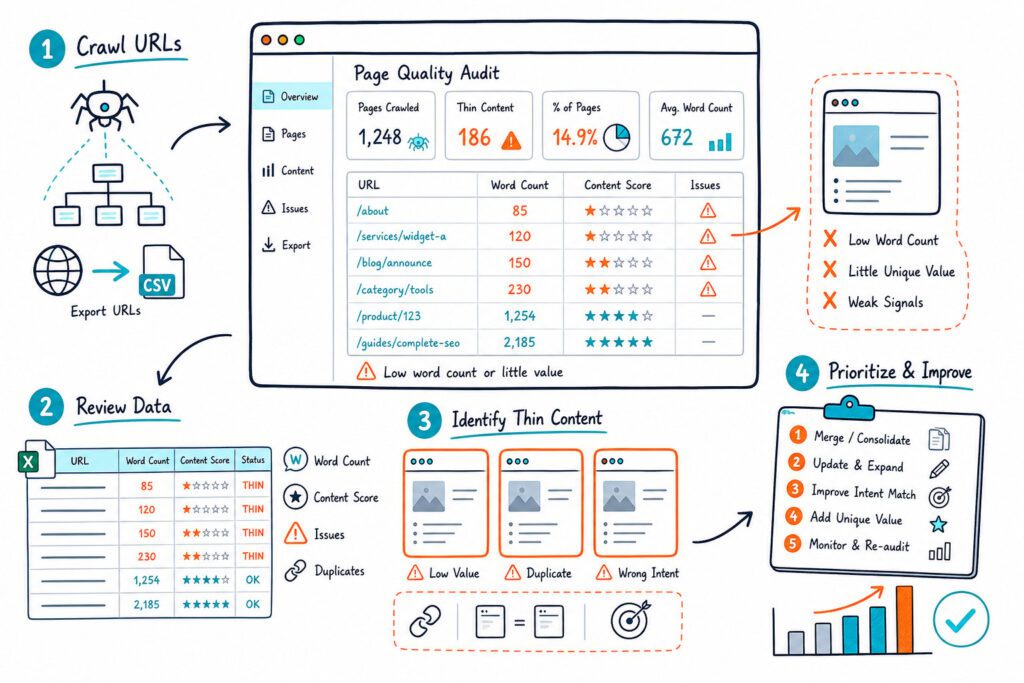
Run the live page through Check Page SEO to spot heading gaps, metadata issues, thin spots, image alt text, and page-level scores. Then give ChatGPT just the highest-impact findings.
Here’s a good priority order:
- Indexing and canonical errors
- Missing or duplicated page structure
- Intent mismatch in title, H1, and opening copy
- Thin coverage and missing subtopics
- Readability and conversion improvements
Use Competitor Gaps to Expand Without Copying
Compare your page with specific ranking competitors to find missing topics, not sentences to rewrite. You’re hunting for coverage gaps like pricing details, process steps, comparisons, proof points, or questions your page skips.
Prompt ChatGPT with your gap list: “Add a section outline that covers these missing topics in original language. Don’t reuse competitor headings or claims.”
This keeps your page from turning into a bland clone of the SERP. Plus, you stay focused on what your actual audience needs, not just cramming in keywords for the sake of it.
Create Prompts for Titles, Headings, Metadata, and Thin Spots
Make one prompt per page element. Testing and approvals go way faster that way.
“Using the target query, current title, H1, and Search Console queries below, write five title tag options under 60 characters. Match commercial intent, include the main topic naturally, and avoid claims you can’t back up.”
For thin sections, give the section copy, the missing topic, and a word range. Ask for a draft that adds substance, examples, or steps. Hold off on fancy Midjourney images until the copy and page purpose are locked in.
Check AI Suggestions Against Your Actual Data
ChatGPT can come up with plausible edits, but it can’t see your site’s performance unless you feed it the data. Check impressions, clicks, CTR, average position, and ranking queries before you greenlight a rewrite.
If you see high impressions but low CTR, it might be time for a new title or meta description. Queries hovering near page one could use stronger headings or a punchier answer near the top.
Treat AI advice as a hypothesis, not gospel. Measure the page before and after your changes using the same date ranges in Google Search Console.
Review Outputs for Evidence, Readability, and Search Intent Fit
Read every recommendation like an editor with a sharp eye and a dash of curiosity.
Make sure claims are backed up, the answer shows up early, and the page still sounds like your brand, including its quirks.
Here’s a handy tip: ask yourself, “Does this page have unsupported claims, repeated phrases, clunky transitions, or lose track of what readers want?” Only flag what really needs a human touch.
Once you’ve gathered your findings, you can whip up structured instructions using AI-ready SEO prompts and plug them into your favorite tool.
Or, if you’re after speed, Add to Chrome for free and keep the workflow rolling.