You compare two web pages for SEO by measuring the same ranking inputs on both URLs, then turning the meaningful differences into tested changes.
Focus on shared search intent, page structure, content coverage, indexability, links, speed, and the search performance data behind each page.

A side-by-side audit stops you from copying a competitor blindly.
You get to see why one result might snag more organic traffic in the SERP, then build a page that’s actually better for the same users.
Set a Valid Page Comparison Baseline
A good comparison starts with two pages fighting for the same job.
If the URLs serve different intents, you’ll end up with a messy SEO plan and a headache.
Confirm Shared Query Intent and SERP Type
Kick things off with your target query and check out the first page of Google.
Are the results guides, product pages, categories, local listings, videos, or tools?
Compare pages only if they’re chasing the same intent.
Just because your service page and a blog post both mention the same keyword doesn’t mean they’re equals. Bing and others might mix things up, but Google’s result pattern is your main guide here.
Choose the Right Competitor URL
Pick a page that ranks near your own for the same query.
Don’t just grab the big dog’s homepage because it looks impressive.
A competitor ranking in positions 3 to 8 is usually more practical than the top result, since it’s easier to pick apart and build on.
Steer clear of outdated pages, test URLs, and anything redirected from some ancient domain.
You want the live, indexable URL that real searchers actually see.
Record the Control Page, Date, Device, and Location
Treat your current page as the control.
Jot down both URLs, the main keyword, audit date, country, city if you’re local, browser, and whether you’re looking at mobile or desktop.
This matters because Google’s results can jump around based on device and location.
If you use Google Analytics, make a note whenever you make big changes so you can tell what caused what.
Build a Comparison Worksheet From Rendered Content
Audit the rendered content, not just the raw HTML.
Stuff like navigation bars, cookie pop-ups, hidden tabs, and JavaScript can throw off a simple crawl.
Set up columns for each page, with rows for title, H1, headings, word count, schema, links, images, canonical, indexability, and visible calls to action.
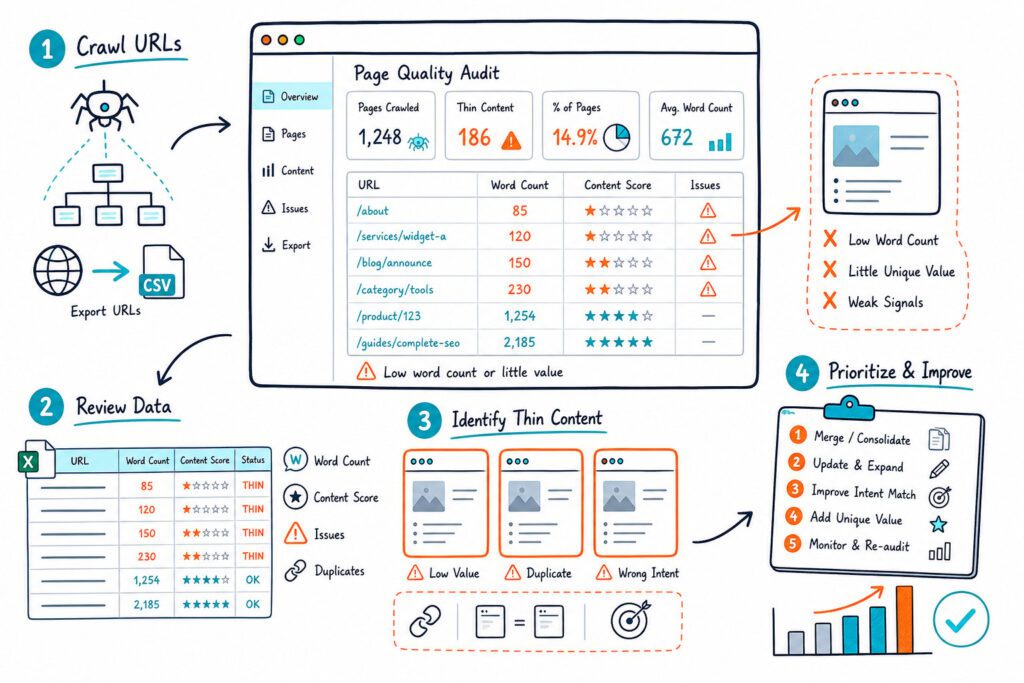
A two-page audit tool comparison can help pull out headings, schema, dates, word counts, and common terms.
Or, try a browser tool like Check Page SEO to inspect the live page you’re staring at.
Audit Gaps and Prioritize Changes
Not every difference is a disaster.
Zero in on the gaps that actually make your page more relevant, fix technical snags, or simply make life easier for visitors.
Compare Titles, H1s, Headings, and Meta Descriptions
Check if both titles match the query and tempt folks to click.
Your title and H1 should be close cousins, but they don’t have to be twins.
Map out H2 and H3 topics side by side.
Missing sections usually scream opportunity.
Meta descriptions aren’t a ranking rocket, but a better snippet can nudge more clicks your way.
Measure Content Coverage, Entities, and Duplicate Content
Don’t just count words.
A longer competitor page might be stuffed with fluff, while your shorter page could answer the query in record time.
List out the entities, examples, definitions, steps, products, and questions each page covers.
Before you add copycat sections, check for duplicate content on your own site.
High similarity can mean you’re stepping on your own toes, which is why page comparison tools that flag common text come in handy.
Review Internal Links, External Links, and Backlink Context
Check which internal links point to each page, what anchor text they use, and if they help users get stuff done.
Add links from relevant, strong pages where they actually make sense.
Look at external links for broken destinations or weak sources.
You can’t fully judge backlinks with just two pages, but keep an eye out for whether the competitor has more powerful referring domains, branded mentions, or linkable assets that might explain the gap.
Check Indexability, Canonicals, Sitemaps, and Technical Signals
Make sure your URL gives a 200 status, allows indexing, uses the right canonical, and shows up in your XML sitemap.
Check meta robots, pagination, hreflang if you need it, structured data, and any redirect chains.
If your page is blocked, canonicalized elsewhere, or missing from search, fix that first.
No sense rewriting copy if Google can’t even see your page.
Evaluate Site Speed, Mobile Usability, and On-Page User Experience
Test both pages on mobile first.
Check loading speed, layout shifts, annoying pop-ups, font size, tap targets, image weight, and whether the main answer shows up without a mile of scrolling.
Speed alone won’t close every ranking gap, but a slow, clunky mobile page can chase users away and drag down great content.
Compare how both pages look across browsers and devices, since weird layout bugs sometimes hide on desktop or mobile.
Validate Recommendations With Search Performance Data
Before you start tinkering with your control page, crack open Google Search Console and Google Analytics. Hunt down queries with loads of impressions, a sad little CTR, or rankings hovering just shy of page one.
If you spot clicks dropping off, that’s another red flag. Focus on one set of changes at a time. Don’t get greedy.
Maybe you rewrite the title and H1 to match what folks are actually searching for. Or you toss in a couple of missing sections and tidy up those internal links.
Be sure to jot down your launch date. Then, after Google’s had a chance to poke around your page again, compare the numbers for the same time frames before and after.
Need a shortcut or just love a good tool? The Check Page SEO Chrome extension is a lifesaver. It’ll show you live page comparisons, flag what’s missing, and help you turn those “aha!” moments into an actual to-do list.